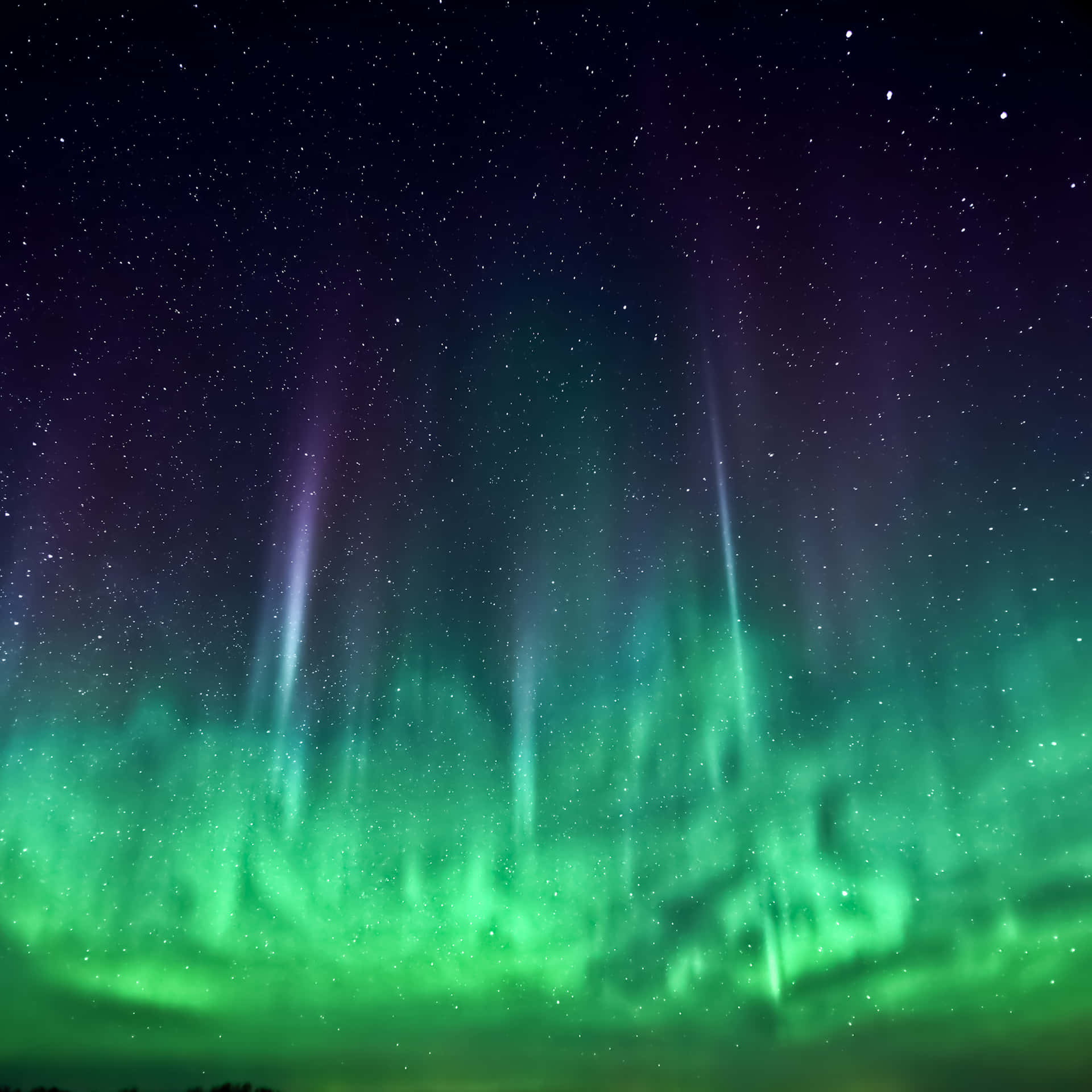
So there was a solar flare up last week and it caused some really cool Northern Lights (aka Aurora Borealis). Do you see them? I was outside the whole evening but didn't see them as I had my back to the North and I think it was cloudy but anyway read and think:
1) Have you ever witnessed the Auroras? Where? What was your thought on them?
2) What causes the Northern Lights? Why do they form more in the North?
3) Why are they called Aurora Borealis? Where does the term come from?
4) What is a solar flare up? Describe it.
http://www.cbc.ca/1.2765776

No, i haven't seen the aurora borealis. The aurora is caused by solar plasma that hits the earth on the magnetic field. It is called the aurora borealis because the term aurora comes from the roman goddess of dawn and borealis comes from the god of the northern wind boreas.
ReplyDeleteDo you think that it would be cool to witness the Northern Lights?
Deletewhere is the best place to see them?
DeleteMark This:
ReplyDeleteUnfortunately, I have not ever seen the Aurora Borealis before, but it is something I would love to experience.
These 'northern lights' are caused by highly charged plasma particles emitted by solar wind react with elements in Earth's atmosphere, and with Earth's magnetic fields. This charges those particles, thus emitting light. The reason that there are many colours in the aurorae is that the plasma shot out by solar winds contains electromagnetic waves (what react with the magnetic fields) from the entire spectrum. Everything from long radiowaves, to visible light waves, to short gamma waves are created. These occurrences happen more in the north because of the magnetic poles reacting stronger to the waves. These aurorae also happen at the south pole (aurora australis).
They are known as the aurora borealis and aurora australis because they are named after Aurora, roman goddess of dawn, as well as Boreas and Auster, respectively the roman gods of the North and South winds. The direct translations are Northern Dawn and Southern Dawn.
A solar flare is a burst of built up electromagnetic waves in the corona of the sun. This corona is the higher armosphere of the sun. There are 3 stages to a solar flare: the precursor stage, the impulsive stage, and the decay stage. In the precursor stage, the release is triggered. In the impulsive stage, particles rapidly excite and are shot out. In the decay stage, everything winds down.
http://hesperia.gsfc.nasa.gov/sftheory/flare.htm
Delete2014/09/21
ReplyDeleteRianne Conklin
Mr. Lahaie
MARK THIS ONE: 2.2 Aurora Borealis
Although I have never before witnessed the Aurora Borealis, it would be something that I’d love to see.
The lights of the aurora are actually collisions between electrically charged particles from the sun that enter the earth's atmosphere. The lights are seen above the magnetic poles of the northern and southern hemispheres. The most common auroral colour is a pale yellowish-green, and is produced by oxygen molecules found about 60 miles above the earth.
In Roman myths, ‘Aurora borealis' means 'dawn of the north’. That being said, the best place to watch them would be in smaller areas of the north that are not subject to light pollution. Scientists say that the best time to watch them is roughly every 11 years at midnight. These lights appear and form more into the North because they are drawn to the poles. The last peak period was in the winter of 2013.
A solar flare is a sudden flash of brightness observed over the sun’s surface. The flare ejects clouds of electrons, ions, and atoms through the corona of the sun into space. It is a sudden, rapid, and intense variation in brightness. A solar flare occurs when magnetic energy that has built up in the solar atmosphere is suddenly released. Radiation is emitted across virtually the entire electromagnetic spectrum, from radio waves at the long wavelength end, through optical emission to x-rays and gamma rays at the short wavelength end.These clouds typically reach Earth just a few days after the event.
http://hesperia.gsfc.nasa.gov/sftheory/flare.htm
http://en.wikipedia.org/wiki/Solar_flare
http://www.northernlightscentre.ca/northernlights.html
MARK THIS ONE
ReplyDeleteI have never witnessed the Northern Lights myself but I have seen pictures and heard stories about them. To me they seem very mysterious and beautiful with color. The Aurora Borealis is caused when electrically charged particles from the sun enter the Earth’s atmosphere and collides with gaseous particles already in the Earth’s atmosphere. The Northern Lights occur in the north because the Earth’s magnetic field is weaker at the poles, allowing some particles from the sun to enter the atmosphere and collide with other particles. The Aurora Borealis is named after the Roman goddess of dawn, Aurora, and the Greek name for the north wind, Boreas, by Galileo in 1619. A solar flare happens when magnetic energy that has been built up in the solar atmosphere is suddenly released, causing a sudden flash of brightness off the suns surface.
Links:
http://en.wikipedia.org/wiki/Solar_flare
http://hesperia.gsfc.nasa.gov/sftheory/flare.htm
http://www.northernlightscentre.ca/northernlights.html
I knew that Aurora came from the Roman goddess i never knew where Borealis came from though thanks :)
DeleteGood job Evan, very informing piece of writing.
DeleteThis is my weekly response:
ReplyDeleteAurora Borealis is cause by electrically charged particles from the sun colliding with one another. The color depends on what kind of gaseous particles are colliding. They're seen over both poles and called "Aurora Autralis" over the south pole. Aurora Borealis means "dawn of North" Aurora Australis means "dawn of South". I've never had the chance to see the Aurora's but it's on my bucket list.